
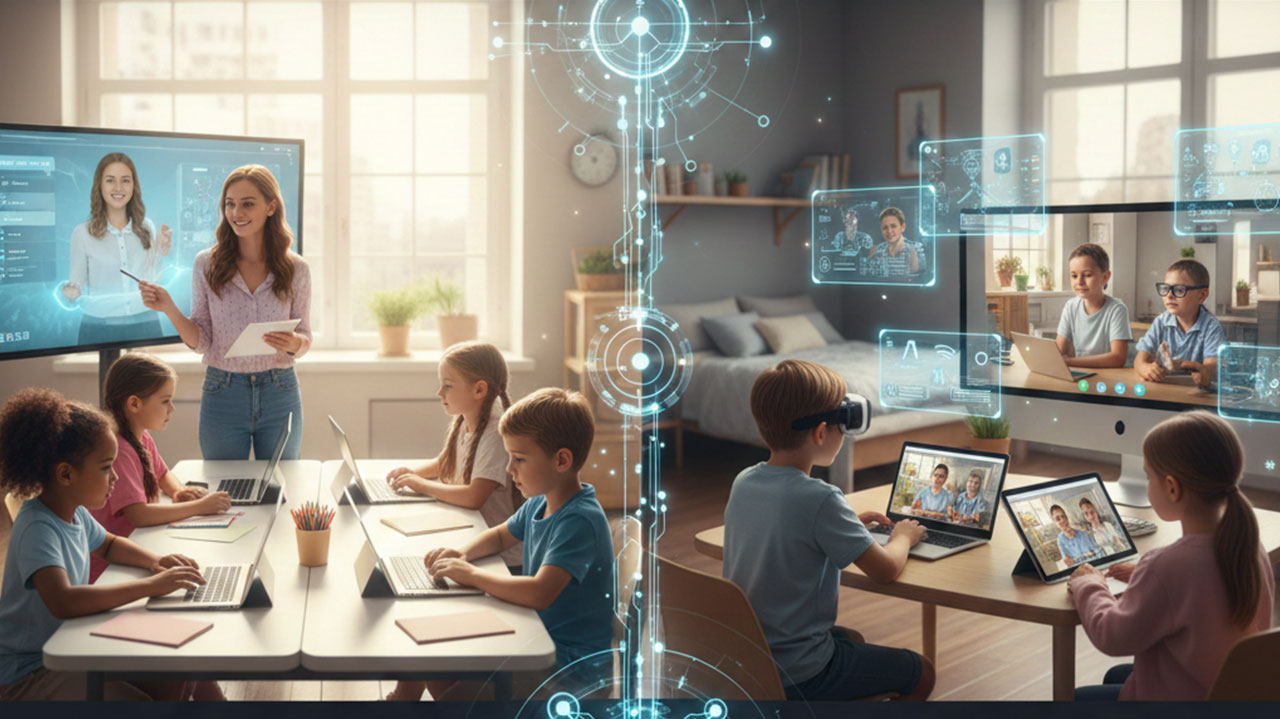
In recent years, K-12 education has experienced remarkable transformation. The traditional classroom is no longer the sole route to high-quality learning. With technological advancements and shifting student needs, hybrid learning—a combination of online and in-person education—has quickly emerged as the favored approach among schools, parents, and educators. Looking ahead to 2025 and beyond, this adaptable and robust model is shaping the future of education.
To grasp this shift in education, it’s essential to clarify what hybrid learning entails for K-12 students.
Hybrid learning is an instructional approach that combines online learning programs with in-person teaching. Students attend physical classes for hands-on activities, discussions, and assessments while also engaging in virtual lessons, digital assignments, and self-paced study from home.
Unlike traditional schooling, hybrid learning allows students to learn anytime, anywhere, without losing the structure and guidance of a formal school system. This model is increasingly adopted by K-12 online schools and progressive institutions worldwide.
Why Hybrid Learning Is Gaining Popularity
One of the biggest reasons for the rise of hybrid learning is its ability to cater to diverse learning styles. Every child learns differently—some thrive in classrooms, while others perform better in digital environments. Hybrid learning bridges this gap.
Parents also appreciate the balance it offers. Students benefit from reduced screen fatigue while still enjoying the flexibility of online learning. Schools can maintain academic standards while embracing innovation, making hybrid education a practical long-term solution rather than a temporary trend.
Key Benefits of Hybrid Learning for K-12 Students
1. Personalized Learning Experience
Hybrid learning allows educators to tailor lessons according to each student’s pace and ability. Advanced learners can move ahead, while students who need extra time receive targeted support. This personalization is one of the biggest benefits of K-12 online learning when combined with classroom instruction.
2. Improved Student Engagement
With digital tools such as interactive videos, virtual labs, and gamified lessons, students are more engaged compared to traditional chalk-and-talk methods. Offline sessions further reinforce concepts through group activities and discussions.
3. Better Social Development
A common concern with virtual education is socialization for online school students. Hybrid learning solves this by offering in-person interaction alongside virtual collaboration. Students build communication skills, teamwork, and confidence through both formats.
4. Flexibility Without Compromising Structure
Hybrid learning offers flexibility in scheduling while maintaining academic discipline. Students follow a structured curriculum through a virtual school academy while also attending physical classes for assessments, mentoring, and extracurricular activities.
5. Future-Ready Skills
Digital literacy, self-management, and critical thinking are essential skills for the future workforce. Hybrid learning naturally develops these skills by exposing students to technology-driven education from an early age.
The Role of Technology in Hybrid K-12 Education
Technology is the backbone of hybrid learning. Learning management systems, AI-based assessments, recorded lessons, and virtual classrooms ensure continuity and consistency in education. Schools offering hybrid models often integrate data-driven insights to track student progress and provide real-time feedback to parents and teachers.
This tech-enabled approach ensures that learning doesn’t stop due to location, health concerns, or time constraints.
Challenges and How Schools Are Addressing Them
While hybrid learning offers many advantages, it also presents challenges such as digital access, teacher training, and maintaining student motivation. Leading K-12 online schools are addressing these issues by:
- Providing device and connectivity support
- Training teachers in blended teaching methods
- Offering mentorship programs and academic counseling
- Ensuring regular parent-teacher communication
With the right support system, hybrid learning becomes a sustainable and inclusive model.
Why Hybrid Learning Is the Future of K-12 Education
Hybrid learning is not just a trend—it’s a response to the changing needs of modern learners. It prepares students for higher education and future careers while ensuring academic excellence, emotional well-being, and social growth.
As education continues to evolve, hybrid learning stands out as a balanced approach that combines the best of traditional schooling and digital innovation. In 2025 and beyond, it is set to redefine how students learn, grow, and succeed.
Comments are closed