
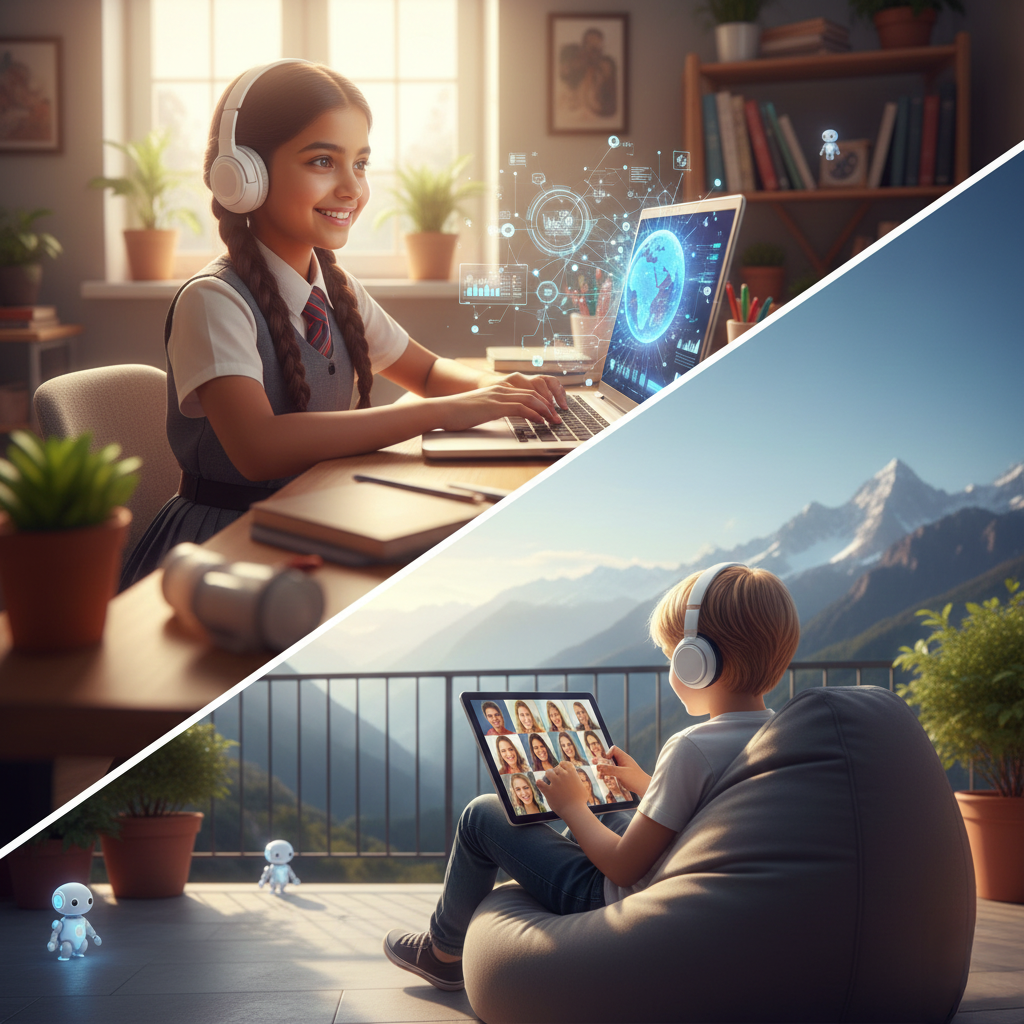
The world is witnessing a seismic shift in how we approach teaching and learning. For centuries, the brick-and-mortar school model reigned supreme. However, the rise of technology and unprecedented global events have propelled a new paradigm to the forefront: online schooling. This transformation is not just a temporary fix; it is a fundamental re-engineering of the educational ecosystem, with countries like India leading the charge in adoption and innovation.
The Digital Leap in India: Bridging the Divide
India’s vast and diverse landscape presents unique challenges for traditional education, from remote villages with limited access to quality schooling to megacities where top institutions are fiercely competitive. This is where online schooling in India has emerged as a powerful democratizing force.
Online learning platforms are offering high-quality, standardized K-12 curricula directly to students who were previously underserved. By removing geographical barriers, a student in a remote location can now access the same world-class education as their counterpart in a metropolitan area. This shift is fueling the digital transformation of education, ensuring continuity and offering tailored solutions for every learner. It caters specifically to the requirements of K12 online education, providing accredited courses that meet national and international standards.
Beyond Borders: The Global Model of Flexibility
The impact of online schooling extends far beyond India’s borders, setting a new global benchmark for educational flexibility. The key to this worldwide acceptance lies in its adaptability:
- Flexibility: Online schooling allows students to learn at their own pace, accommodating extracurricular activities, athletic training, or personal health needs without compromising academic rigor.
- Personalization: AI-driven tools within a virtual classroom environment help educators identify knowledge gaps instantly. The curriculum can be adjusted in real time, moving away from a one-size-fits-all approach to highly customized learning paths.
- Access to Experts: Students are no longer restricted to the faculty in their immediate vicinity. They can learn from specialist teachers and connect with global peers, enriching their perspective and cultural literacy.
The virtual classroom experience today is interactive and engaging, utilizing multimedia, live sessions, and collaborative projects that often surpass the capabilities of a traditional physical setting.
Defining the Future of Education
The long-term success of online schooling confirms that it is not merely an alternative but a critical component of the future of education. This model i s intrinsically designed to prepare students for a rapidly evolving, digitally driven job market.
By integrating technology daily, students develop essential 21st-century skills like digital literacy, self-discipline, time management, and independent research.
Online schooling is fundamentally changing the role of the learner—from a passive recipient of information to an active participant and co-creator of their educational journey. It empowers students, providing them with the tools and freedom to thrive in a world that demands continuous, flexible learning.
Comments are closed