
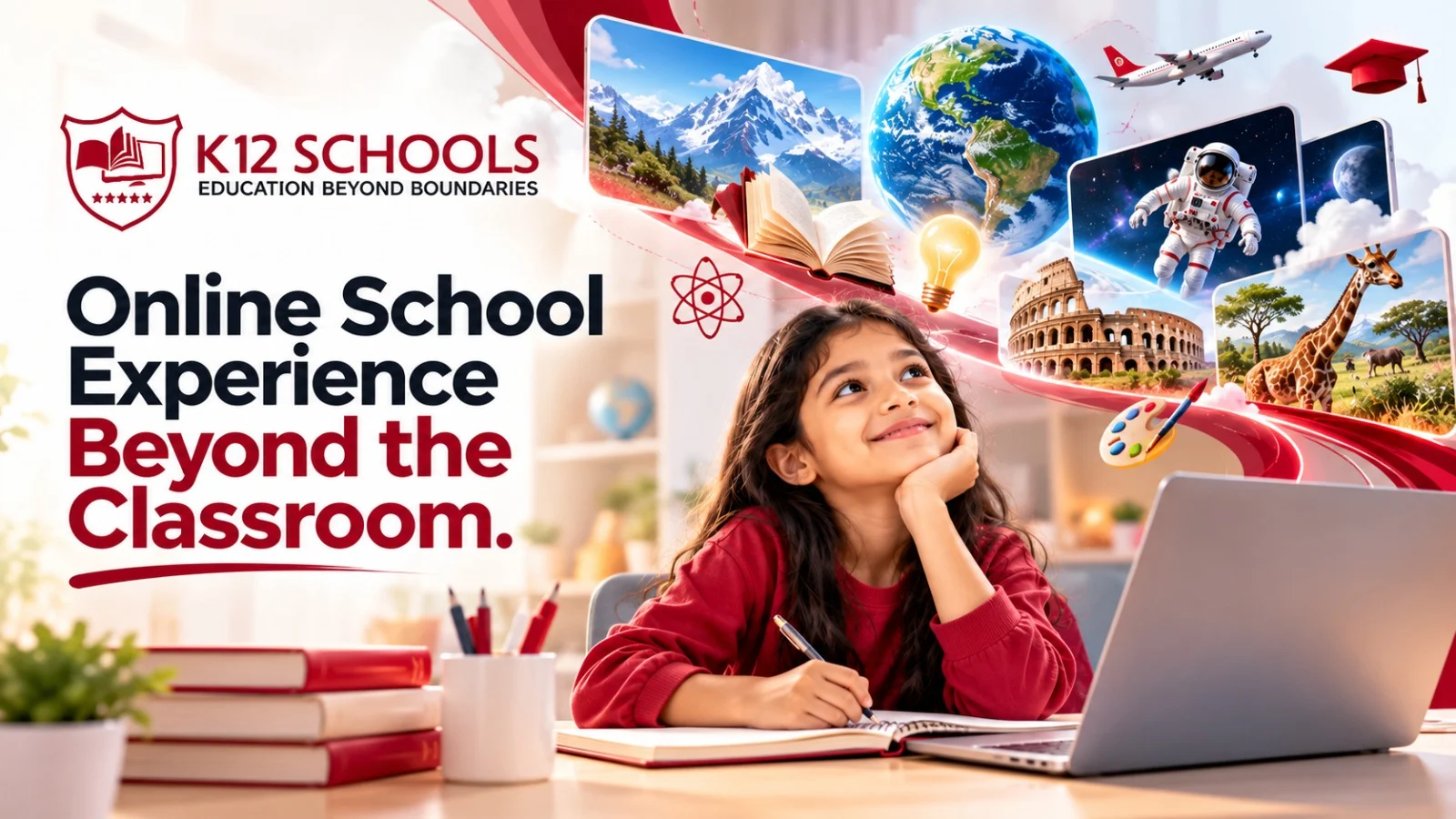
What does a student’s school day look like when the classroom is no longer limited to four walls?
At K12 Schools, the online school experience goes beyond logging in, attending a lesson, and completing an assignment. It brings together live online classes, teachers, technology, personalised learning, student activities, and opportunities to explore ideas beyond traditional academics.
For students, this can mean learning in a connected online classroom, developing digital awareness, engaging with different perspectives, celebrating achievements, and becoming part of a wider learning community.
The result is an online learning experience designed to connect academics with the skills, interests, and experiences that shape a student beyond the syllabus.
When the Classroom Is Everywhere
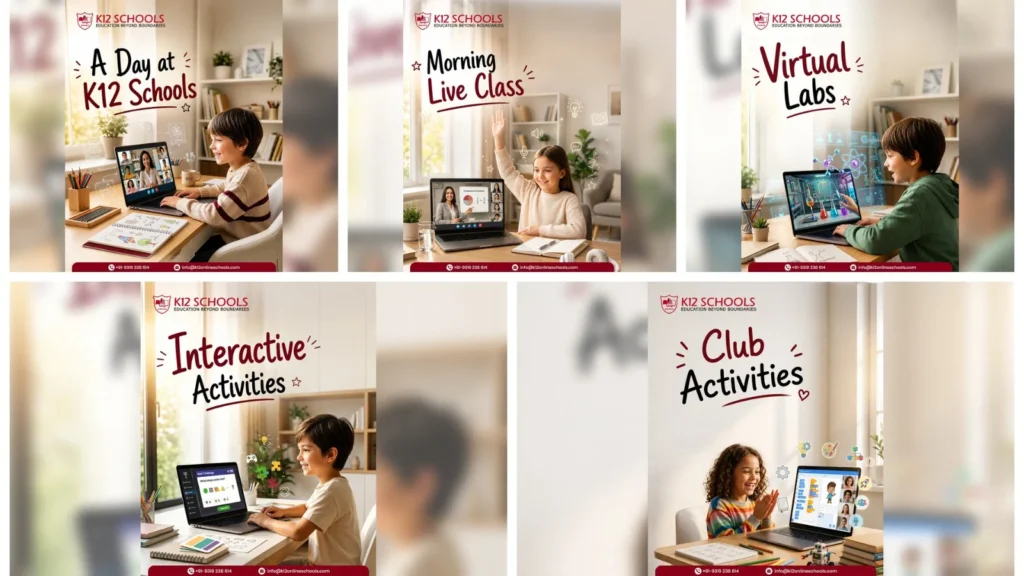
An effective online school does not mean students simply study alone in front of a screen.
The online classroom experience can include live teacher interaction, structured lessons, subject discussions, activities, questions, and regular opportunities to participate.
At K12 Online Schools, live learning is designed to create a connected classroom environment where students can engage with educators and their peers while continuing their education from home.
A typical day can bring together:
- Live online classes with teachers
- Structured subject learning
- Interactive discussions and activities
- Digital learning resources
- Opportunities to ask questions and clarify concepts
- Academic progress monitoring
This makes the virtual classroom more than a place to receive information. It becomes a space where students can participate, communicate, and build confidence as learners.
More Than Lessons: Learning in a Connected World
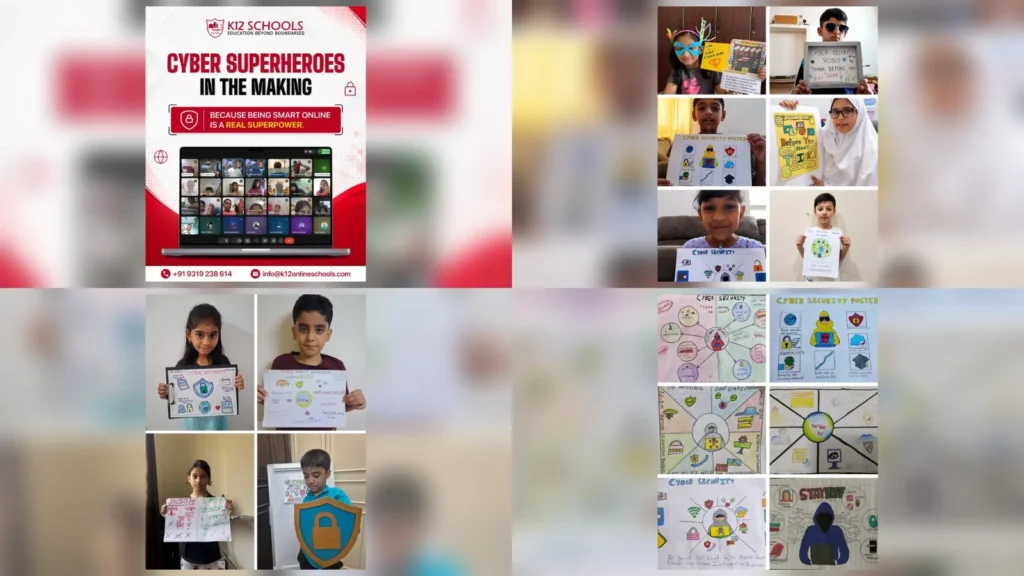
Today’s students are growing up in a digital world. Learning how to use technology responsibly is therefore becoming part of the broader student learning experience.
Education beyond the classroom can include understanding digital responsibility, communicating appropriately online, evaluating information, and developing awareness of how technology influences everyday life.
These skills matter because online learning is not only about consuming digital content. Students also need to understand how to navigate the digital environment thoughtfully.
A strong online education experience should therefore help students become responsible and confident digital learners—not just efficient users of technology.
A World-Class Learning Experience Beyond Borders
One of the defining possibilities of online schooling is that learning does not have to be restricted by geography.
An online learning experience can introduce students to broader perspectives while giving families access to different educational pathways.
K12 Schools offers British, American, and Indian curriculum pathways, allowing families to consider an international curriculum or an Indian pathway according to their educational goals.
This approach can support families looking for a world-class online school experience while keeping learning accessible from home.
But international education is about more than a curriculum name. A meaningful global experience also involves curiosity, communication, collaboration, and an understanding that people can learn and think differently.
Learning Beyond Boundaries
The phrase learning beyond the classroom has taken on a new meaning in online education.
Students can learn through digital resources, discussions, activities, projects, clubs, and experiences that extend beyond their regular subjects.
This can create a global learning experience where education is not limited to a textbook or a physical location.
For students, learning beyond boundaries can encourage:
- Curiosity about different cultures and ideas
- Communication and collaboration
- Independent learning
- Creativity and problem-solving
- Broader awareness of the world
This is where global learning connects with everyday education. Students are not simply learning about the world; they are developing skills to participate in it.
The Students Are at the Heart of the Story
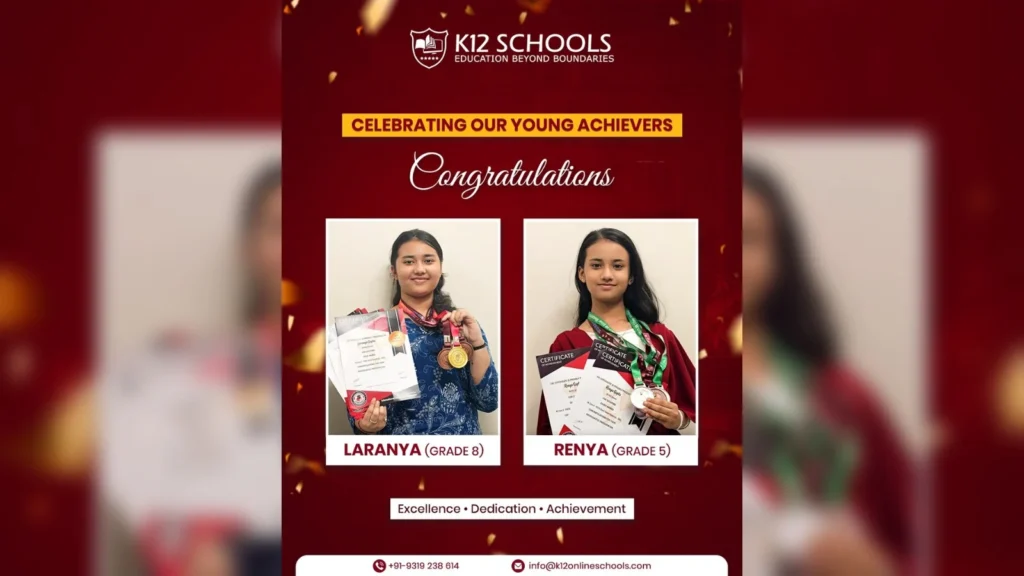
An online school is ultimately about the students—not the technology.
Every lesson, activity, project, and achievement contributes to the student experience in an online school.
Student achievements can reflect much more than examination results. Participation in activities, creative work, academic progress, leadership, collaboration, and personal growth can all become meaningful parts of a student’s journey.
Celebrating these moments also helps students recognise their own progress.
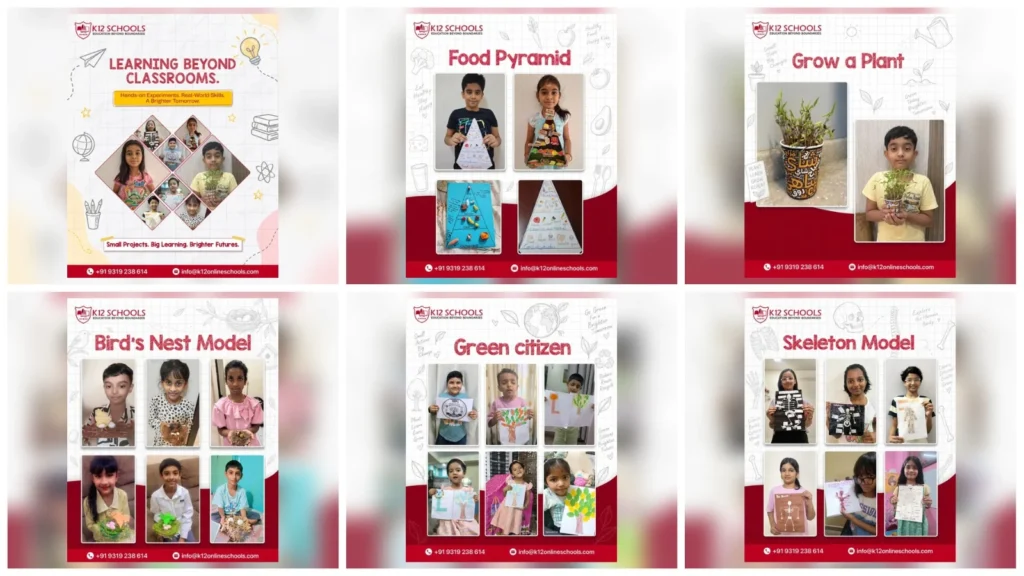
The online school learning experience should give students opportunities to discover what they enjoy, develop their strengths, and build confidence along the way.
What Makes the K12 Schools Experience Different?
There is no single feature that defines a meaningful online school experience. It is the combination of several elements.
Live Learning
Live online classes allow students to interact directly with educators rather than relying only on recorded content.
Experienced Educators
Teachers remain central to the learning process. Technology can support teaching, but meaningful learning still depends on guidance, explanation, interaction, and feedback.
Personalised Learning
Students have different learning needs and progress at different speeds. Personalised learning can help create a more student-centred approach by using technology and progress information to support individual learning.
Technology
A well-designed digital platform can connect lessons, learning resources, communication, and progress tracking in one environment.
Global Learning
Exposure to different perspectives can help students develop a broader understanding of the world and prepare for an increasingly connected future.
Student Experiences
Education does not end when the academic lesson finishes. Clubs, activities, creative opportunities, and other experiences can help students explore interests beyond the core curriculum.
Together, these elements can create a more complete online learning experience for students.
More Than an Online School
Calling K12 Schools an online school describes the format—but not the complete experience.
The larger idea is to create a connected learning environment where students can learn academically while developing communication, confidence, creativity, independence, and awareness of the wider world.
This is particularly important in a digital environment.
The objective should not be to recreate every part of a traditional classroom on a screen. Instead, online schooling can use the strengths of technology while maintaining the human side of education.
That means teachers remain important. Students remain at the centre. Technology becomes an enabler rather than the entire experience.
For families considering an online school, this distinction matters.
The right question is not simply, “Does the school offer online classes?”
It is:
“What kind of learning experience will my child have every day?”
The K12 Story Continues Beyond the Classroom
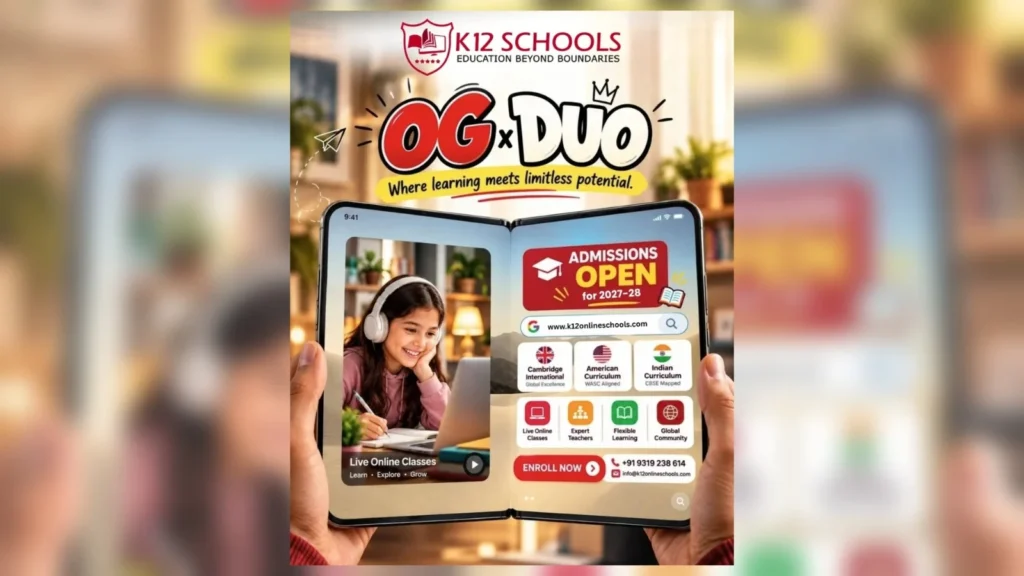
The online school experience does not end when a live class finishes.
It continues through student achievements, learning moments, activities, creative work, school initiatives, and the everyday experiences that make up a student’s journey.
That is what makes learning beyond academics important. Education becomes more meaningful when students have opportunities to discover interests, celebrate progress, connect with others, and understand their place in a wider world.
At K12 Schools, the journey brings together online learning, live teaching, personalised learning, international education, technology, and student experiences to create a connected approach to schooling.
Want to see more of the K12 Schools experience? [Explore Our Latest Learning Moments & Student Stories] and discover how learning continues beyond the classroom.
Frequently Asked Questions
Q1. What is an online school experience like for students?
Answer: An online school experience can include live classes, teacher interaction, structured learning, digital resources, activities, progress tracking, and opportunities to participate beyond regular lessons.
Q2. What is the difference between online learning and online schooling?
Answer: Online learning can refer to individual courses or digital resources, while online schooling generally provides a more complete academic structure, including subjects, teachers, schedules, assessment, and student support.
Q3. Can an online school provide learning beyond the classroom?
Answer: Yes. Students can participate in clubs, activities, projects, discussions, creative opportunities, and other experiences that extend learning beyond regular academic lessons.
Q4. How does personalised learning work in an online school?
Answer: Technology can help monitor progress and identify areas where students may need additional support, while teachers can use these insights to provide more targeted guidance.
Q5. Can online schooling provide an international learning experience?
Answer: It can. Schools offering international curricula and broader learning opportunities can give students exposure to different academic pathways, perspectives, and ways of learning.
Q6. What should parents look for in an online school?
Answer: Parents should consider live teacher interaction, curriculum, personalised support, technology, student activities, academic structure, progress tracking, and the overall quality of the student learning experience.
Comments are closed