
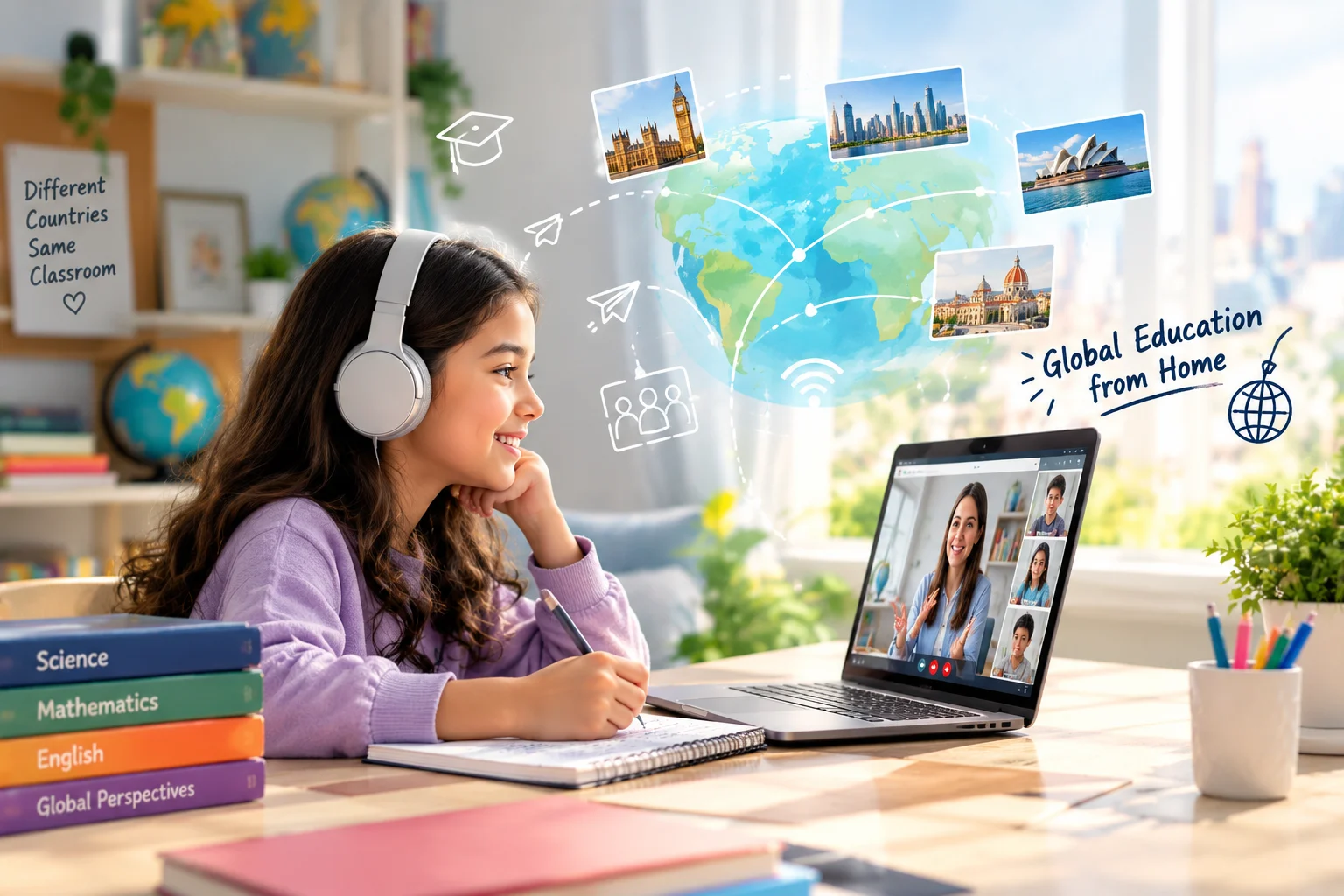
A child no longer needs to leave their country to experience a broader world of learning. Global education can now begin at home through the right curriculum, technology, teachers, and exposure to different perspectives.
But global education is not simply about studying an international curriculum online. It is about helping students become confident learners who can understand different cultures, communicate across boundaries, think critically, and adapt to a changing world.
This is where online education can create new possibilities. With the right online school, students can access structured academics, personalised support, and a wider learning environment without being limited by geography.
What Does Global Education Really Mean?
Global education helps students understand the world beyond their immediate surroundings. It combines academic learning with awareness of different cultures, perspectives, ideas, and global issues.
Global Education Goes Beyond an International Curriculum
An international curriculum can be an important part of global education, but it is only one part of the experience.
A genuinely global learning environment can encourage students to:
- Understand different perspectives and cultures
- Communicate with people from diverse backgrounds
- Develop critical-thinking and problem-solving skills
- Become more independent learners
- Explore ideas beyond their local environment
- Prepare for an increasingly interconnected world
For parents, this means looking beyond a curriculum name and understanding what the student’s everyday learning experience actually looks like.
How Online Education Supports Global Learning
The growth of online learning has made education less dependent on physical location. Students can attend live classes, interact with teachers, access digital resources, and participate in activities from home.
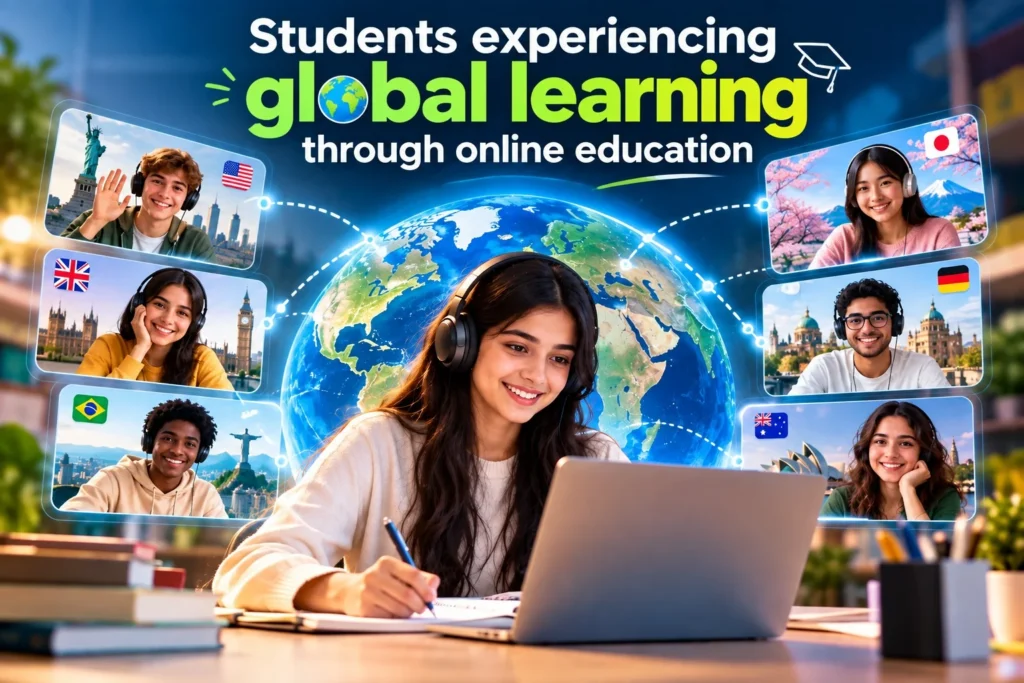
Learning Beyond Geography
A traditional school generally serves a specific local community. An online model can connect students and educators across different locations.
This can make international education from home more accessible to families who want broader academic exposure without immediately relocating.
Flexible Online Learning
Family circumstances can change. Parents may travel, relocate, or need a schooling model that works around different schedules.
Flexible online learning can provide greater continuity while still maintaining a structured academic routine.
However, flexibility should not mean a lack of structure. A quality online school should provide clear schedules, teacher interaction, academic expectations, and student support.
Access to International Curriculum
For some families, curriculum choice is central to their education plans.
An international curriculum online can provide an academic pathway that aligns with a student’s future plans, particularly when families are considering education across different countries.
The right curriculum depends on the student’s age, academic goals, future study destination, and need for continuity.
Can Students Get Global Education From Home?
Yes—but simply studying through a laptop does not automatically create global education.
A collection of recorded videos and worksheets may provide digital learning, but a broader global education from home experience requires more.
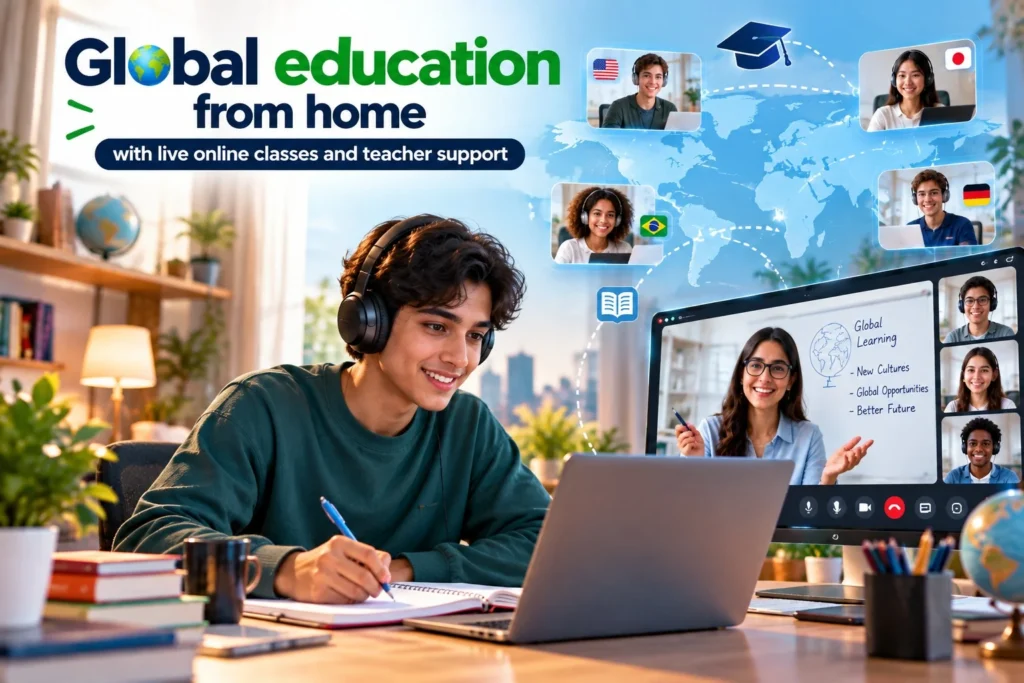
Parents should look for an online learning model that combines:
- Live teacher-led classes
- Structured academic schedules
- Personalised learning support
- Progress monitoring
- Interactive digital resources
- Collaboration and communication
- Extracurricular opportunities
- Parent visibility
The goal should be to create a complete schooling experience rather than simply transfer traditional textbooks to a screen.
How Personalised Learning Fits Into Global Education
Students do not all learn in the same way or at the same pace.
Some may need additional practice, while others may benefit from more challenging activities. This is where personalized learning can strengthen online education.
Technology can help teachers identify learning patterns, monitor progress, and understand where students may need additional support.
Technology and Teacher Support
Technology should support teachers rather than replace them.
The strongest online learning experience combines technology with human guidance, structured teaching, individual attention, and meaningful interaction.
This balance is especially important in a K12 environment, where students need both academic direction and encouragement to become increasingly independent learners.
Is an International Curriculum Enough for Global Education?
Not necessarily.
An international curriculum provides an academic framework. Global education goes further by creating opportunities for students to develop broader perspectives and skills.
When comparing an online school with international curriculum, parents should ask:
- Are classes live and interactive?
- How much access do students have to teachers?
- How is individual progress monitored?
- Are students encouraged to collaborate?
- What support is available when a student struggles?
- What opportunities exist beyond academic lessons?
- How visible is the student’s progress to parents?
These questions help parents evaluate the actual learning experience rather than relying only on labels such as “international” or “global.”
What Makes a Global Learning Environment?
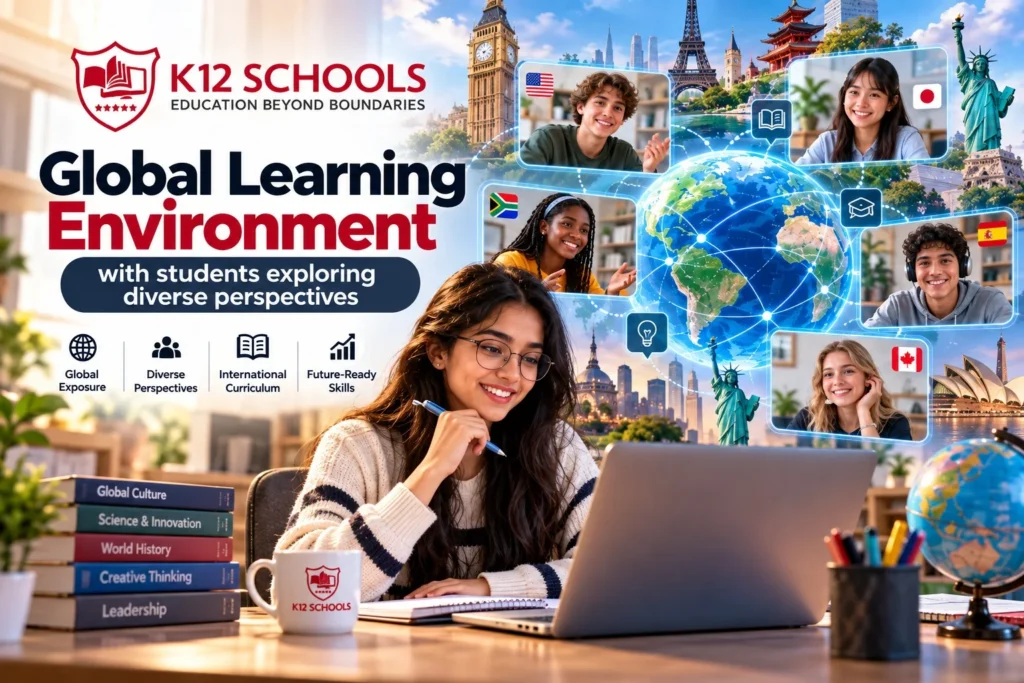
A strong global learning environment is not defined by geography alone.
It can be built through the way students learn, communicate, collaborate, and explore ideas.
For example, students can develop global awareness through:
- Collaborative projects
- Cultural activities
- Discussions involving different viewpoints
- International academic resources
- Communication and presentation activities
- Technology-supported learning
- Experiential and extracurricular opportunities
This can help students understand that education is not only about completing a syllabus. It is also about learning how to engage with a wider world.
How K12 Online Schools Support Global Learning
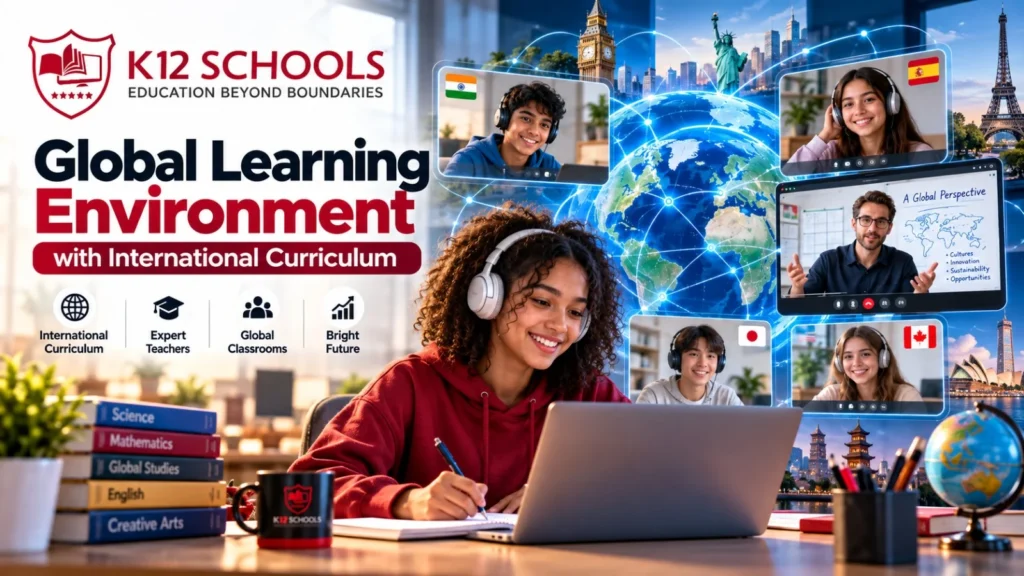
K12 Online Schools combines online schooling with technology-enabled learning, live classes, multiple curriculum pathways, and experiences beyond core academics.
The school offers British, American, and Indian curriculum pathways, giving families different options based on their educational requirements.
Its AI-enabled learning approach can also support a more technology-driven schooling experience, while activities beyond regular academics provide opportunities for students to explore interests outside the core curriculum.
For families considering international online education, this broader approach matters. Global learning should support academic development while also encouraging communication, independence, collaboration, and wider world awareness.
Who Can Benefit From International Online Education?
International online education may be useful for families who:
- Want international learning opportunities from home
- Prefer curriculum flexibility
- Are considering different educational pathways
- Want exposure to broader perspectives
- Need a structured online schooling experience
- Prefer learning that is less restricted by geography
An online international school can be particularly appealing when families want a combination of structured schooling, technology, and international academic exposure.
However, online schooling is not automatically suitable for every student. Age, learning preferences, independence, academic goals, family support, and curriculum requirements should all be considered.
What Should Parents Look for in an Online International School?
Before choosing an international online school, look beyond words such as “global,” “international,” or “flexible.”
Ask what your child will actually experience every week.
A Parent’s Checklist
Curriculum: Is it appropriate for your child’s academic goals?
Teaching: Are classes live, structured, and interactive?
Personalisation: How does the school identify individual learning needs?
Technology: Does the learning platform genuinely support learning and progress tracking?
Student experience: What happens beyond regular academic classes?
Parent support: Can parents understand their child’s progress?
Continuity: Can the school support the student’s learning as family circumstances change?
The right school is not necessarily the one with the longest feature list. It is the one that aligns with your child’s learning needs and your family’s educational goals.
The Future of Global Education
Education is becoming increasingly connected. Students can learn through digital platforms, access international curricula, collaborate across geographical boundaries, and develop skills for a more interconnected world.
That does not mean traditional schooling has lost its value. Instead, families now have more models to consider.
For parents exploring global education, the real opportunity is to find a learning environment that combines strong academics with flexibility, technology, personalisation, and broader exposure.
If you are exploring an online school with international curriculum and want to understand which schooling pathway may suit your child, [Enquire About Admissions] to discuss the available options with K12 Online Schools.
Frequently Asked Questions
Q1. What is global education?
Answer: Global education helps students understand different cultures, perspectives, and global issues while developing the skills needed to participate in an increasingly connected world.
Q2. Can students get global education from home?
Answer: Yes. Online schooling can provide access to international curricula, live teaching, digital resources, and broader learning experiences without requiring students to relocate.
Q3. Is an international curriculum the same as global education?
Answer: No. An international curriculum is an academic framework, while global education is broader and can include cultural awareness, collaboration, communication, and understanding different perspectives.
Q4. What is an online school with international curriculum?
Answer: It is an online schooling model that delivers an international curriculum through digital learning, often combining live classes, teacher support, technology, and structured academic programmes.
Q5. Can online learning provide personalised learning?
Answer: Yes. Technology can help monitor student progress and identify areas where additional support may be useful, while teachers can use these insights to provide targeted guidance.
Q6. Is international online education suitable for every student?
Answer: Not necessarily. Parents should consider the child’s age, learning style, independence, academic goals, curriculum requirements, and ability to engage effectively in an online environment.
Comments are closed