
Introduction
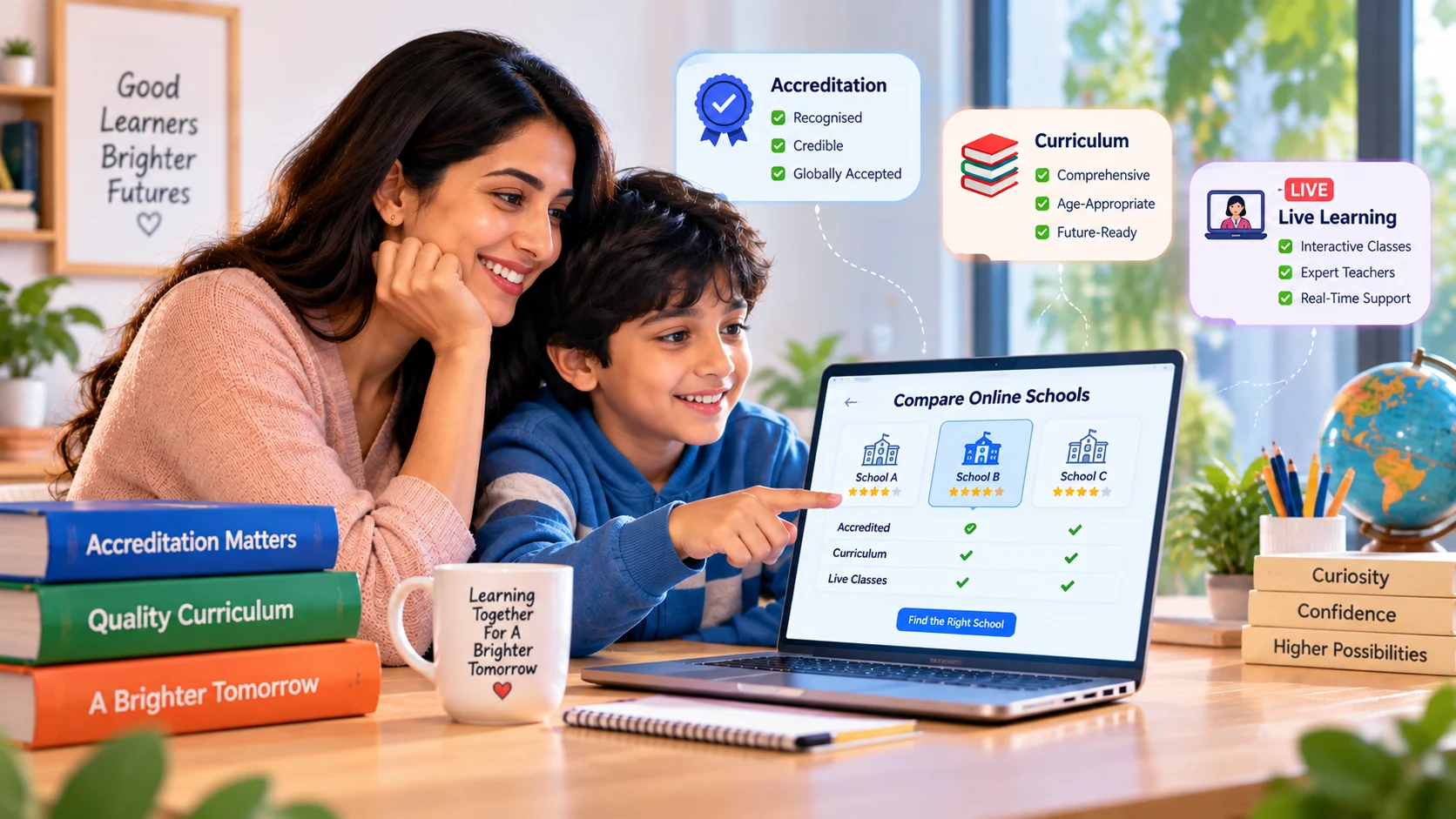
Imagine enrolling your child in an online school because its website says “accredited” — only to discover later that the qualification isn’t recognised where your child plans to study.
That’s why knowing how to choose an online school isn’t simply about comparing fees, websites or school rankings.
Parents need to know what is actually accredited, who recognises it, how the school teaches, and where the qualification can take their child next.
Here are seven questions worth asking before you enrol.
1. Who Exactly Accredited the School?
When a school says it’s accredited, don’t stop there.
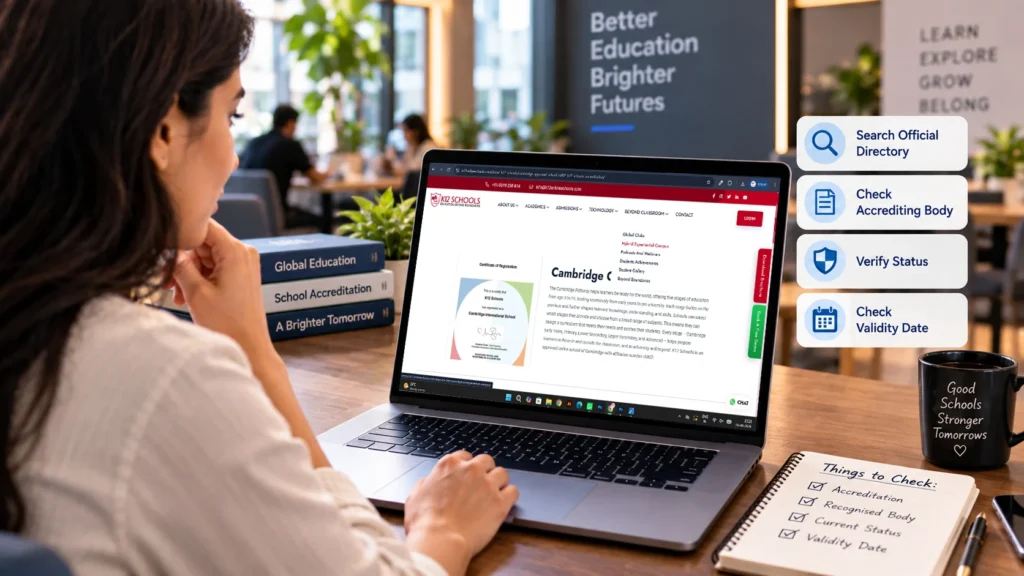
Ask for the exact name of the accrediting organisation.
Then ask:
- Who awarded the accreditation?
- Is it current?
- What programme or grades does it cover?
- Can I verify it independently?
- Is the school listed in the accrediting body’s official directory?
This is the first step in how to verify online school accreditation.
Don’t rely only on a badge displayed on the school’s website. Go to the accrediting organisation’s own website and check.
The important question isn’t “Are you accredited?” It’s “Accredited by whom, and what does that accreditation cover?”
2. Does the Accreditation Cover Every Grade?

This is easy to overlook.
A school may have recognition for certain grades or programmes but not necessarily the entire K-12 journey.
If you’re looking for an online school nursery to grade 12 accreditation pathway, ask:
“Does the accreditation cover every grade my child will study?”
This matters particularly for families planning to stay with one school for several years.
You don’t want to discover a K-12 accreditation gap after your child has already invested years in the programme.
Ask for the details in writing before enrolling.
3. Where Will My Child’s Qualification Be Recognised?
Accreditation and university admission aren’t exactly the same thing.
A qualification that works well for one destination may have different requirements elsewhere.

For example, a student targeting universities abroad may need to understand how their chosen curriculum fits those universities’ entry requirements.
Ask the school:
- Which qualifications will my child receive?
- Where have recent graduates progressed?
- What documentation is provided?
- Are there specific university or country requirements we should know about?
If your child is targeting the UK or U.S., ask specifically about the online school for UK/US university admission pathway.
For Indian families abroad, curriculum choice can also matter. Cambridge vs CBSE for university abroad isn’t simply a question of which curriculum is “better”; it depends on the student’s academic goals and destination.
4. When You Say “Live Classes,” What Does That Mean?
Not every online learning experience is the same.
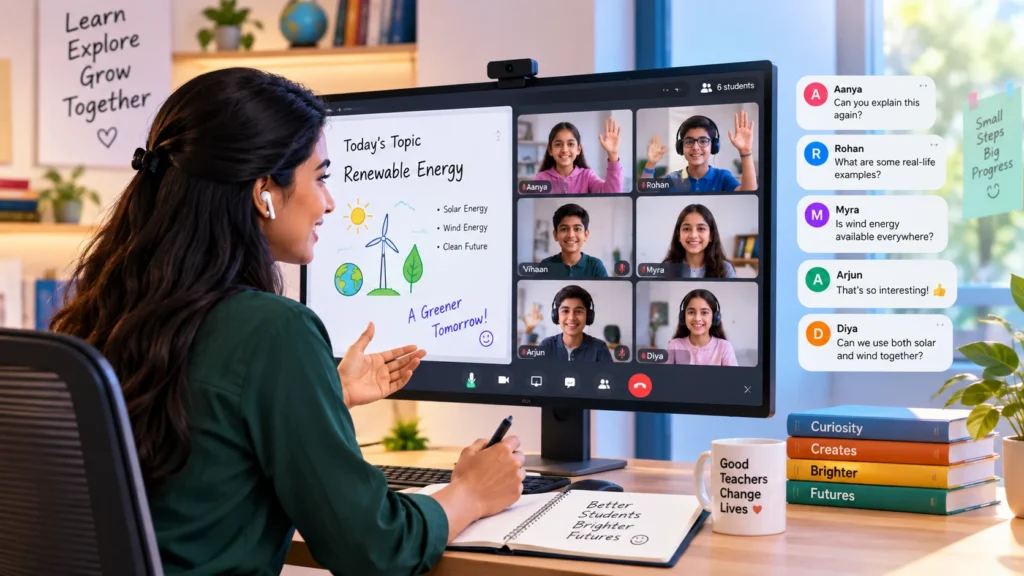
An online school with live classes should provide real-time interaction between teachers and students.
Ask:
- What percentage of lessons are live?
- How large are the classes?
- Can students ask questions during lessons?
- What happens if a student misses a class?
- Can my child attend a real class before enrolling?
A recorded video can explain a topic.
A live teacher can notice confusion, answer questions and adapt the explanation.
That’s a major difference.
5. What Happens When My Child Falls Behind?

Every school can say it offers “student support.”
The better question is:
What actually happens when my child starts struggling?
Ask for the process step by step.
For example:
- How is the problem identified?
- Does the teacher receive an alert?
- Does the parent get notified?
- Is additional academic support available?
- How quickly does intervention happen?
This is where technology can become genuinely useful.
An online school with AI learning tracking can help identify learning patterns, while teachers provide the human support and guidance.
AI shouldn’t replace teachers.
It should help teachers understand students better.
6. What Is the Complete Cost?
Don’t compare schools using tuition alone.
Ask for the complete annual cost in writing.
Check whether the quoted amount includes:
- Tuition
- Examination fees
- Learning materials
- Technology/platform charges
- Activities
- Other compulsory costs
If you’re comparing accredited K12 online schools , make sure you’re comparing the same cost categories.

A lower headline fee isn’t necessarily cheaper once all additional costs are included.
7. Can My Child Experience a Real Class Before Enrolling?
This may be the most useful question of all.
Ask:
“Can my child sit in on a real live class before we enrol?”
Not a recorded promotional video.
A genuine class lets you see:
- How teachers interact with students
- Whether students participate
- How questions are handled
- How engaging the lesson feels
- Whether your child is comfortable with the environment
And watch your child, too.
Do they participate?
Are they curious?
Do they feel comfortable asking questions?
Sometimes your child’s reaction tells you more than the brochure does.
Your Online School Accreditation Checklist
Before making a decision, make sure you can answer yes to these:
- ✅ I know who accredits the school.
- ✅ I can independently verify the accreditation.
- ✅ I know which grades/programmes it covers.
- ✅ I understand where the qualification may be accepted.
- ✅ I know whether classes are genuinely live.
- ✅ I understand what happens when my child struggles.
- ✅ I have the complete annual cost in writing.
- ✅ My child has experienced or observed the learning environment.
If you can’t get clear answers, don’t rush the enrolment.
What About NRI and Expat Families?
For an online school for NRI students or an online school for expats, there is one additional consideration: continuity.
Families may move between countries, change academic systems or eventually return to India.
Before enrolling, ask:
“Will this curriculum and qualification continue to make sense if our family moves?”
Look at curriculum, documentation, grade continuity, time-zone support and future university requirements.
For internationally mobile families, flexibility isn’t just convenience.
It can be academic continuity.
What About Accredited Homeschool Programs?
This is another area parents often confuse.
Accredited homeschool programs K-12 and accredited online schools aren’t necessarily the same model.
With homeschooling, the family generally takes a much larger role in organising and managing education.
An online school typically provides a structured school environment with teachers, lessons, assessment and academic records.
So before choosing between the two, ask:
“Do I want to manage my child’s education, or do I want a school to manage the academic structure with us?”
That answer can make the decision much clearer.
FAQ
Is online school accredited?
Some online schools are accredited, while others are not. The important thing is to identify who provides the accreditation, what it covers and how you can verify it independently.
How do I verify online school accreditation?
Ask for the exact accrediting organisation, then check the organisation’s official website or directory. Don’t rely solely on an accreditation logo displayed by the school.
How do I check if a diploma is recognised?
Ask which qualification the school awards and where its graduates have progressed. Then check the specific admission requirements of the universities or education authorities relevant to your child’s destination.
Can online school students get into good universities?
Yes, online students can progress to universities, but requirements vary by institution and country. Accreditation, curriculum, qualification and university-specific entry requirements all matter.
Are free accredited online schools good?
Some can be suitable, depending on eligibility and location. However, families should compare curriculum, accreditation, support, flexibility and progression opportunities rather than choosing based on price alone.
What should I ask during online school admission?
Ask about accreditation, curriculum, live classes, grade coverage, student support, university progression, fees and the admission process. A transparent school should be able to explain these clearly.
Final Thoughts
Choosing an online school shouldn’t feel like choosing a subscription.
You’re choosing an academic pathway for your child.
So before you enrol, verify the accreditation. Check the grade coverage. Understand the curriculum. Ask where the qualification is recognised. Experience a real class. Understand the support system. Get the complete cost in writing.
Don’t choose an online school because it sounds impressive. Choose it because you can verify what it promises.
Comments are closed